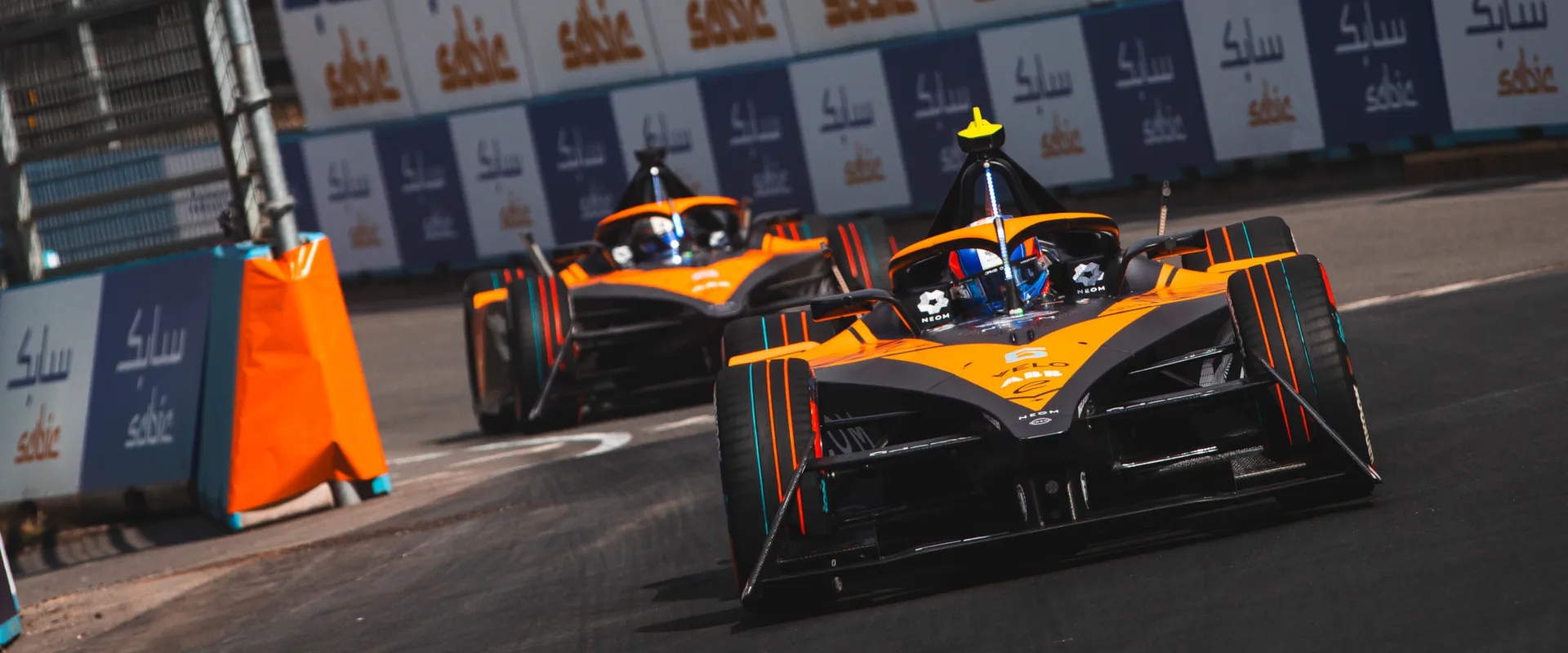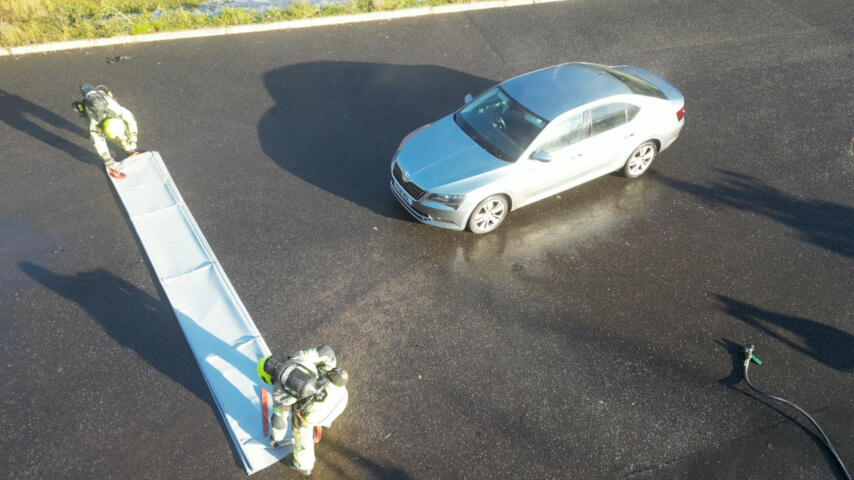
Step 1
WEARING THE RECOMMENDED PPE – Remove the Fire Cloak™ EV fire blanket from the storage bag. Unroll the Fire Cloak™ EV fire containment blanket and position centrally in front of the vehicle.
Essential instructions for trained fire and rescue professionals on the safe use, deployment and handling of Fire Cloak™ EV Fire Limitation Blankets
Please note this product is intended for use in containing Electric Vehicle (“EV”) fires and its use is therefore likely to take place in extremely hazardous circumstances. Any person who may use this product should familiarise themselves with these Instructions for Use before any need for use arises and periodically after that, and where possible should be supplied with appropriate protective equipment and receive appropriate training.
The information and instructions in the Instructions for Use should where appropriate be used in relation to your own Health and Safety risk assessments and operating and training plans wherever applicable.
IF YOU ARE NOT FAMILIAR WITH THESE INSTRUCTIONS FOR USE AND ARE CONSULTING THEM WHEN ANY FIRE OR POTENTIAL FIRE IS IN PROGRESS YOU MUST TAKE THE TIME TO READ THE FOLLOWING SECTIONS BEFORE ATTEMPTING ANY USE OF THIS PRODUCT:
See Instructions for Use and Deployment Instructions
NOBODY, EXCEPT TRAINED FIRE AND RESCUE PERSONNEL, SHOULD USE THIS PRODUCT IN RELATION TO A VEHICLE THAT IS ACTUALLY ON FIRE.
Launched in 2022 after many months of research, development and testing the FIRE CLOAK™ Electric Vehicle fire limitation blanket has been designed, when used properly, to contain electric vehicle (“EV”) fires. PLEASE NOTE: The Fire Cloak™ WILL NOT, on its own, extinguish EV fires.
If an electric vehicle high energy propulsion battery is damaged, or a manufacturing fault causes just a single cell to short circuit this can start a fire, generating temperatures over 1,000°C (1,832°F). This fire spreads from cell to cell creating a domino-effect known as “Thermal Runaway” and in a short space of time an intense fire is established.
Lithium battery Thermal Runaway fires cannot be extinguished by conventional means. The battery electrolyte usually contains flammable hydrocarbons and the lithium oxide cathode is highly reactive and self-oxidising, so the fire feeds itself. If left unchecked extremely high temperatures and intense fires can result.
When a Fire Cloak™ EV Fire Blanket is deployed in accordance with these “Instructions for Use” the combustion potential is minimised by depriving the fire of oxygen. Because the fire is contained, temperatures drop rapidly which helps prevent damage to surrounding vehicles and property.
Manufactured from a specially modified glass fibre material and coated with a fire-resistant polymer, the resulting Fire Cloak™ high-tech fabric has extremely high temperature resistance.
Product code: CFB2186B
Dimensions: 8 x 6 metres (26 x 19½ feet) ±5%
Weight: c.28kg (62lbs) ±5%
Product code: CFB1209
Dimensions: 12 x 9 metres (39 x 29¼ feet) ±5%
Weight: c.33kg (73lbs) ±5%
FIRE CLOAK™ has been extensively tested in real-life EV fire demonstrations and has also been independently tested to the following international fire and flame resistance standards:
BS476 Parts 6 & 7: Class O (similar to Class A in USA)
BS476 Part 20-2018: Furnace Test at 1,000°C for 90 minutes
ASTM D6413: Vertical Flame Resistance
EN13501-1:2018: A2,s1,d0
FMVSS 302: Federal Motor Vehicle Fire Safety Standard
NFPA701: Fire Resistance of Fabrics
DIN SPEC 91489:2024-11: Requirements for fire limitation blankets for use with electric vehicles – COMPLIANT
BS476 Part 20-2018: Furnace Test at 1,000°C for 90 minutes
ASTM D6413: Vertical Flame Resistance
EN13501-1:2018: B,s1,d0
FMVSS 302: Federal Motor Vehicle Fire Safety Standard
NFPA701: Fire Resistance of Fabrics
DIN SPEC 91489:2024-11: Requirements for fire limitation blankets for use with electric vehicles – COMPLIANT
Requirements for fire limitation blankets for use with electric vehicles
Developed by the German institute for standardization – DIN (Deutsches lnstitut fur Normung). This is the first performance standard in the world developed exclusively for fire limitation blankets for use with electric vehicles.
As part of this standard (section 12) the following manufacturer’s information must be declared.
No the FIRE CLOAK™ EV fire blanket will not extinguish an EV fire, it has been designed to contain and control the burn preventing collateral damage to surrounding vehicles and property.
Yes, the FIRE CLOAK™ EV fire blanket works equally as well on ICE (internal combustion engine) vehicle fires and reduces the water required to put out the fire thus minimising polluted water run-off.
Nobody, except trained fire and rescue personnel, should use the Fire Cloak™ EV fire blanket in relation to a car that is actually on fire. In circumstances where the Fire Cloak™ EV fire blanket is used on a precautionary or preventive basis, properly equipped, trained and prepared personnel can use it in accordance with the “HOW TO USE” section, provided that a proper assessment of all risks present is made and all relevant precautions taken.
Yes, the FIRE CLOAK™ EV fire blanket has been extensively tested by independent laboratories. It has passed internationally recognised fire resistance standards and real-life EV fire demonstrations.
If the Fire Cloak™ EV fire limitation blanket is used where an EV fire event is avoided, for example, when it is used to isolate a quarantined or suspicious vehicle that is exhibiting an elevated battery temperature according to a Thermal Imaging Camera reading or hissing/popping sounds can be heard and the vehicle does NOT burst into flames, the answer is YES it can be reused PROVIDED THAT it has been fully checked for signs of mechanical damage, contamination or heat degradation and found to be fully undamaged before storage.
In general where any EV fire event has taken place the Fire Cloak™ EV fire limitation blanket is not reusable. ANY fire limitation blanket that is deployed on a vehicle that ultimately sets on fire or is already alight will result in the blanket material being heavily contaminated after use. There will probably be deposits of heavy metals such as nickel, manganese and cobalt along with other chemicals that could include HF acid, organic carbonates and PCB’s. ANY EV fire limitation blanket would then need to be decontaminated and resealed before being used again. This is a specialised and expensive process.
ONLY TRAINED PERSONNEL ARE PERMITTED TO USE THE FIRE LIMITATION BLANKET
If an EV or any other vehicle is on fire, you must not attempt to use the Fire Cloak EV fire limitation blanket unless you are properly trained personnel of the fire and rescue service.
Before starting to deploy the Fire Cloak™ EV fire limitation blanket you must ensure you are wearing suitable protective clothing and personal protective equipment (P.P.E.) which must include as a minimum;
Fire resistant clothing, gloves and shoes, and a face shield and ventilator mask to protect against fine particles, gases and vapours.
BEWARE OF POTENTIAL HAZARDS
Do not put yourself or others at risk by attempting to use the FIRE CLOAK™ EV fire blanket where it is unsafe to do so.
This includes but is not limited to circumstances where:
Use a thermal imaging camera to measure the temperature of a suspect EV, a normal temperature for an EV should be less than 50°C (122°F). Check the temperature at no more than 10 minute intervals, if the temperature increases to 60°C (140°F) or higher, and if it is safe to do so, deploy the Fire Cloak™ EV fire limitation blanket in accordance with these instructions and immediately follow your site emergency plan, including informing co-workers and management to evacuate and creating an exclusion zone. As soon as it is safe to do so, call the fire and rescue service.
If a fire has resulted, the Fire CloakTM EV fire limitation blanket must only be removed by the fire service.
The Fire Cloak™ EV fire limitation blanket can also be deployed on a vehicle that is quarantined after accident damage.
When towing or recovering an EV, before loading the vehicle onto your truck or trailer, use a thermal imaging camera to assess the status and temperature of the vehicle. In a safe condition this should normally be less than 50°C (122°F). Deploy the Fire Cloak™ EV fire blanket and use ratchet straps or a rope to secure the blanket at tyre level when transporting. When recovering an EV or other vehicle that has been on fire, check the vehicle temperature, and if the temperature is below 50°C (122°F) deploy and secure the Fire Cloak™ EV fire blanket (as above), or if a Fire Cloak™ EV fire limitation blanket has been used to contain the fire, leave it in place and secure it.
Recovered EVs that are taken to a storage compound and quarantined after accident damage should be covered with a Fire Cloak™ where it is safe to do so in accordance with the instructions contained in this document and following those instructions.
Under no circumstances should the Fire Cloak™ EV fire limitation blanket be removed if a fire is developing or if the vehicle is on fire. This should only be done by trained personnel of the fire and rescue service in accordance with the applicable instructions.
ONLY TRAINED PERSONNEL ARE PERMITTED TO USE THE FIRE LIMITATION BLANKET
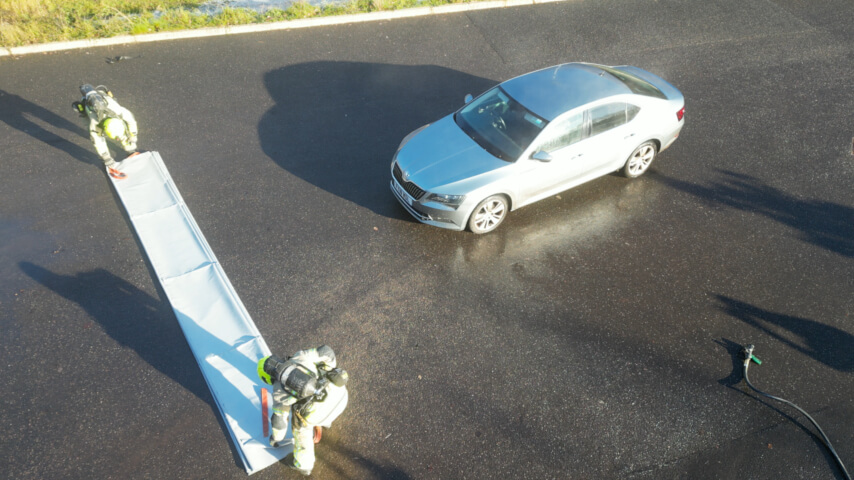
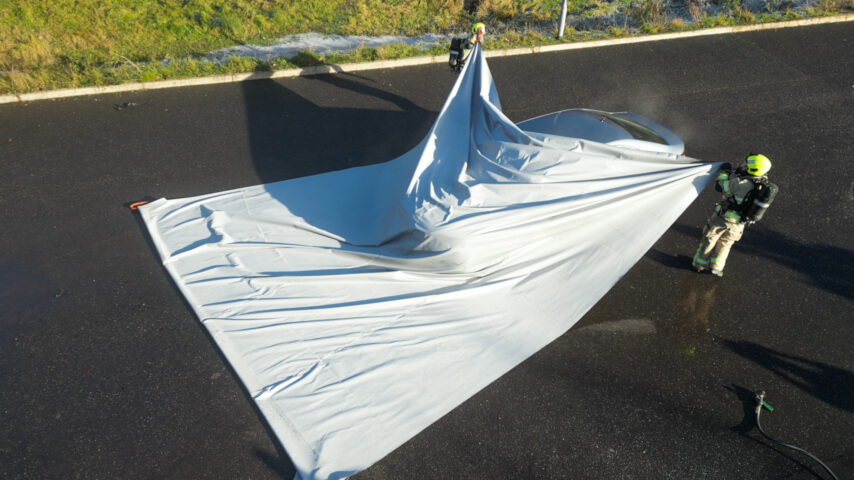
WEARING THE RECOMMENDED PPE – Remove the Fire Cloak™ EV fire blanket from the storage bag. Unroll the Fire Cloak™ EV fire containment blanket and position centrally in front of the vehicle.
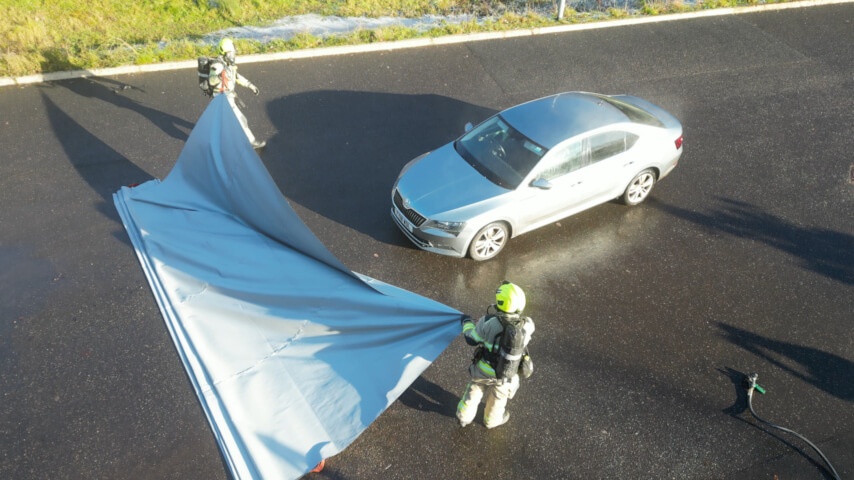
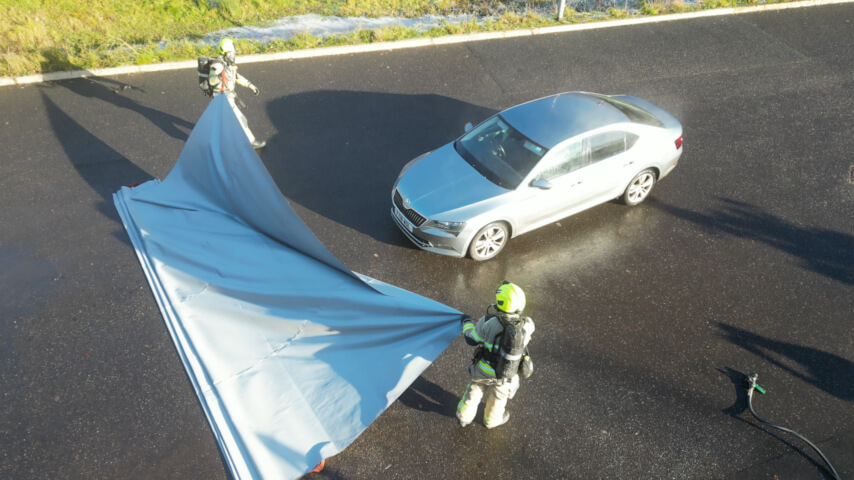
With 2 people holding the red corner straps, pull so that the leading edge of the Fire Cloak™ EV fire containment blanket is under tension.
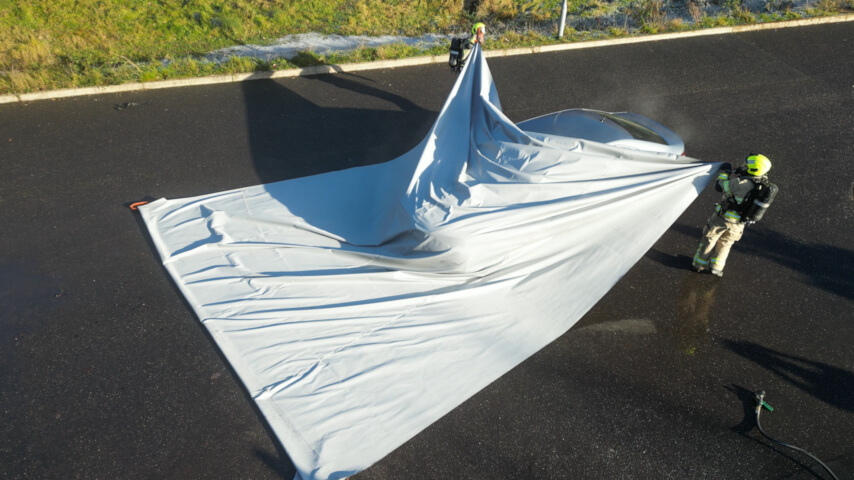
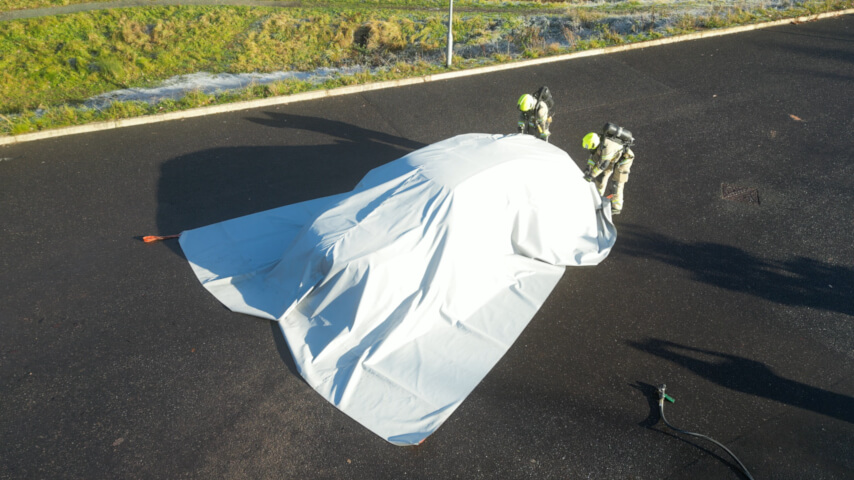
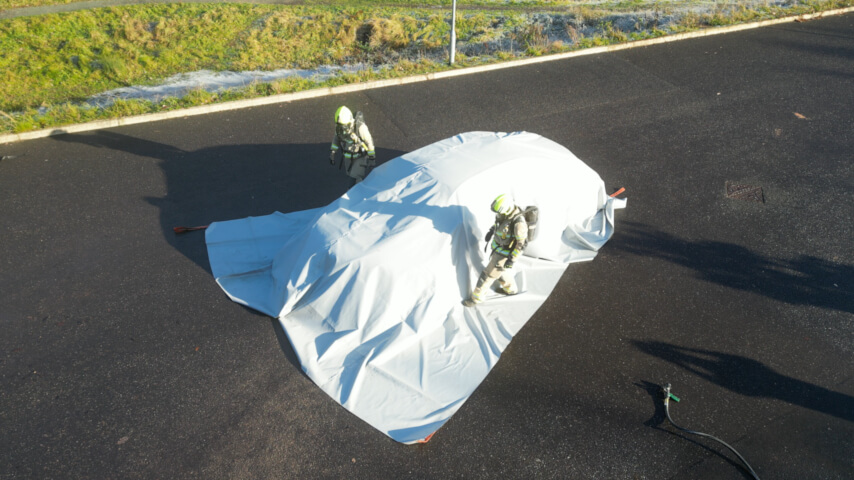
Then pull the Fire Cloak™ EV fire containment blanket over the vehicle in a continuous movement and ensure that it overlaps equally on all sides and front and rear of the vehicle.
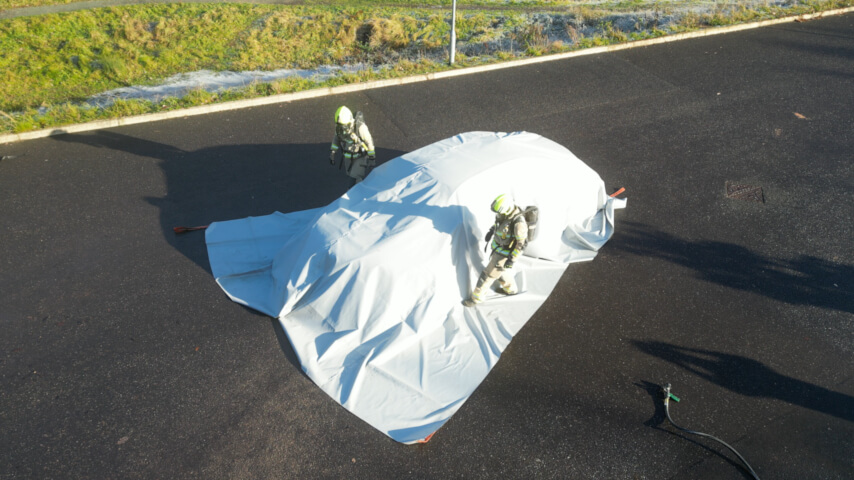
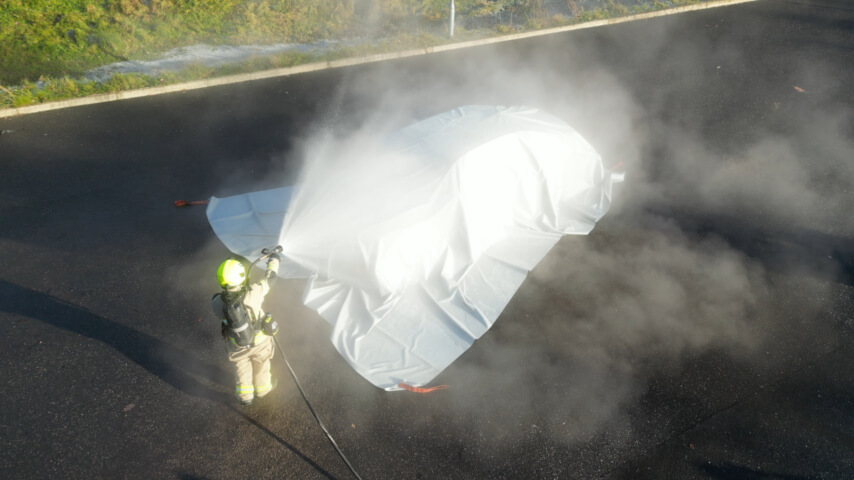
Make sure the outer edges of the Fire Cloak™ are in contact with the ground at the front, rear and both sides. Press down with your feet to flatten the edges, safety boots are essential.
The deployment advice given here is based on our experience with numerous fire departments worldwide but is always subject to the assessment of the situation by personnel present at the incident and should be tailored to your risk assessments and health and safety guidelines and requirements.
IMPORTANT: The Fire Cloak™ EV fire limitation blanket can only be reused if it has not been in contact with fire and is not damaged, it must be refolded in accordance with these instructions.
2 people are required to refold the blanket.
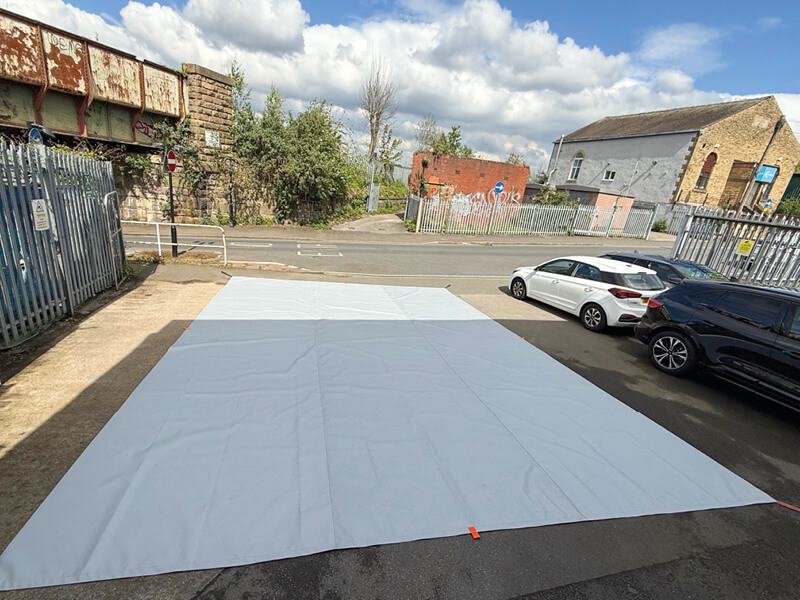
Lay the fire blanket flat on clean ground or a large floor, sweep to remove any sharp objects first.
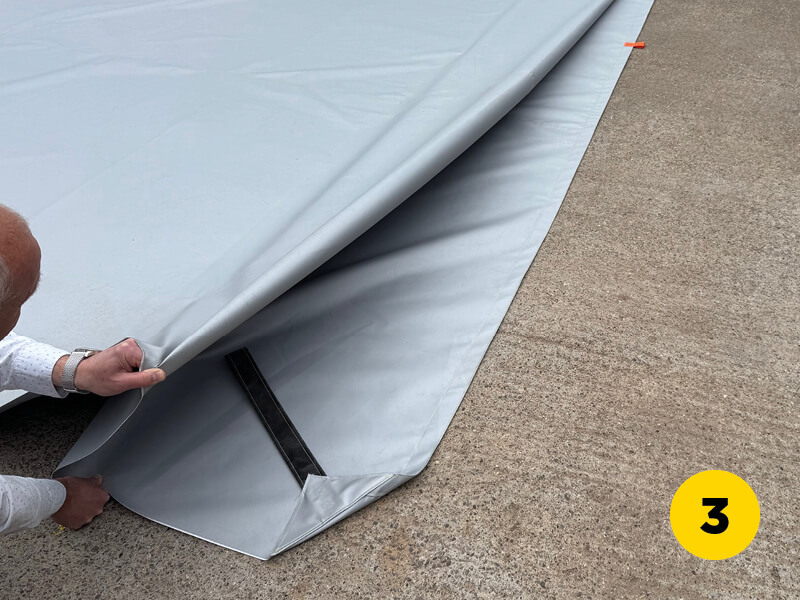
At the end with black handles mark the ground with chalk or wax crayon along both long sides of the blanket. The first mark should be 65cm from the end of the blanket and the second mark 130cm from the end. This will help ensure accurate folding.
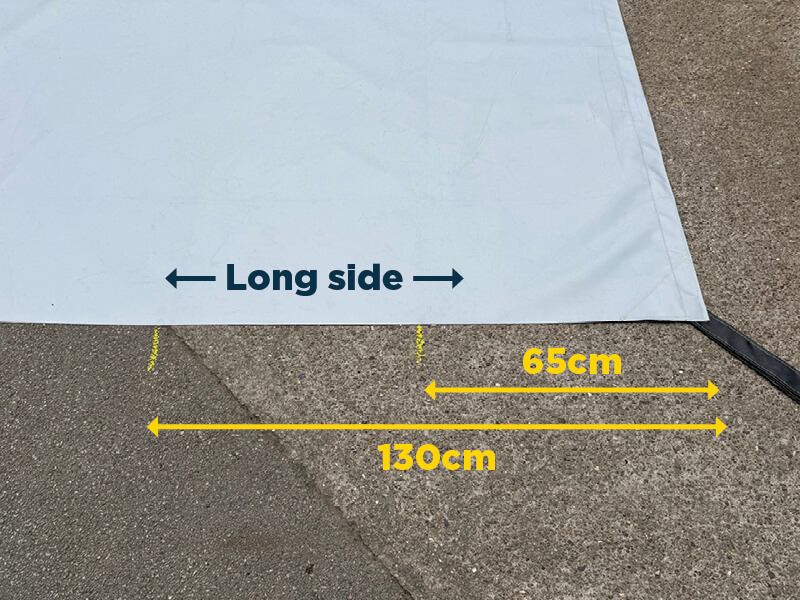
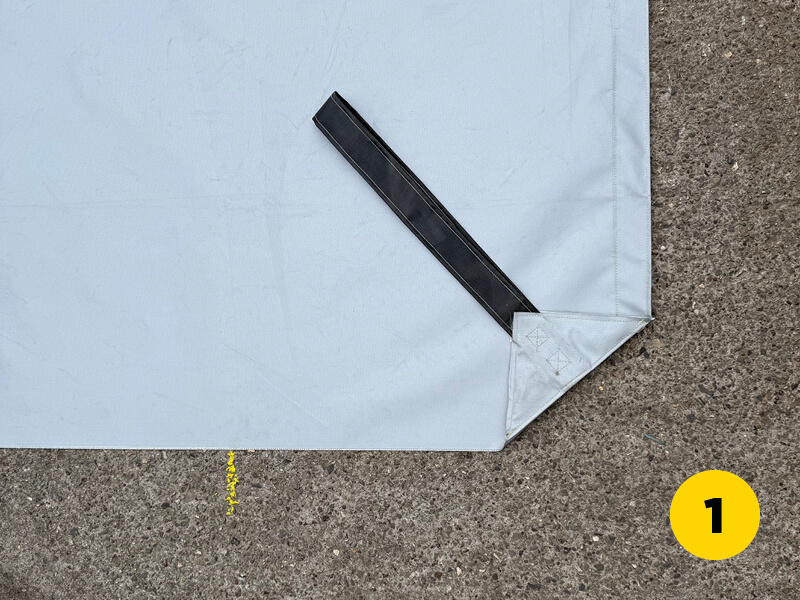
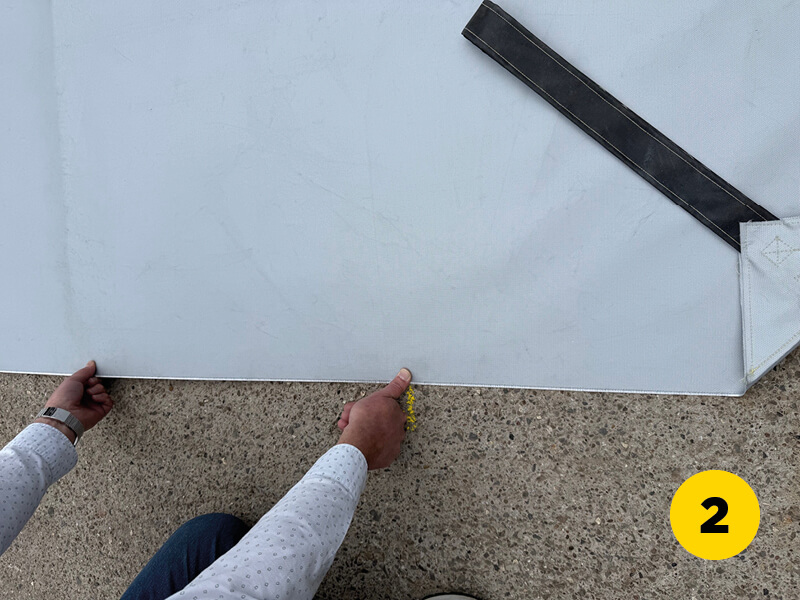
Fold in the corner black straps (1). Hold the fabric on the first mark at 65cm from the end (2), then pull the fabric from the second mark (130cm) toward the end of the blanket to create the first fold (3). The blanket is folded in a concertina or “Z” fold pattern for easy deployment when next used (4).
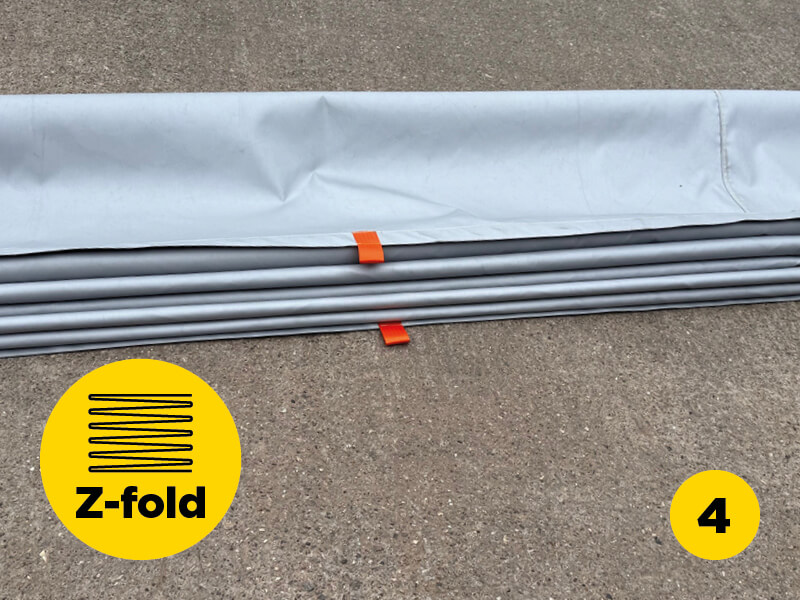
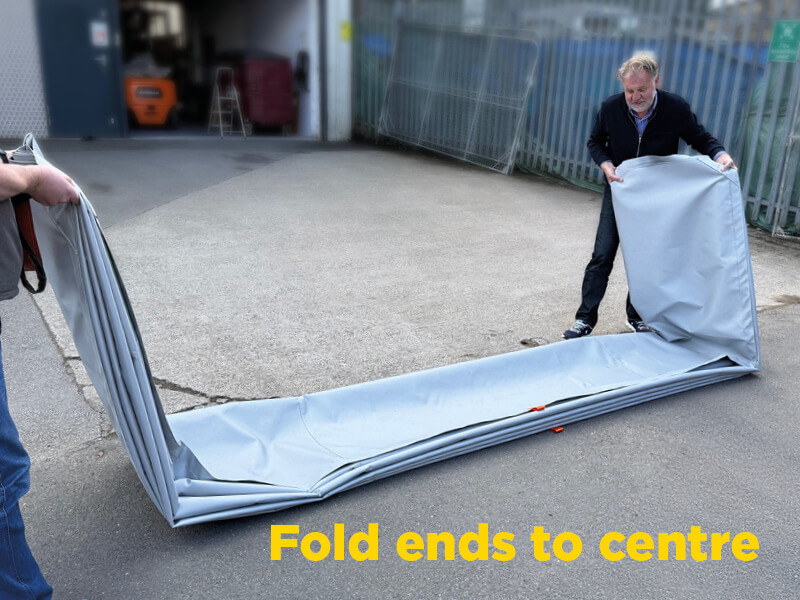
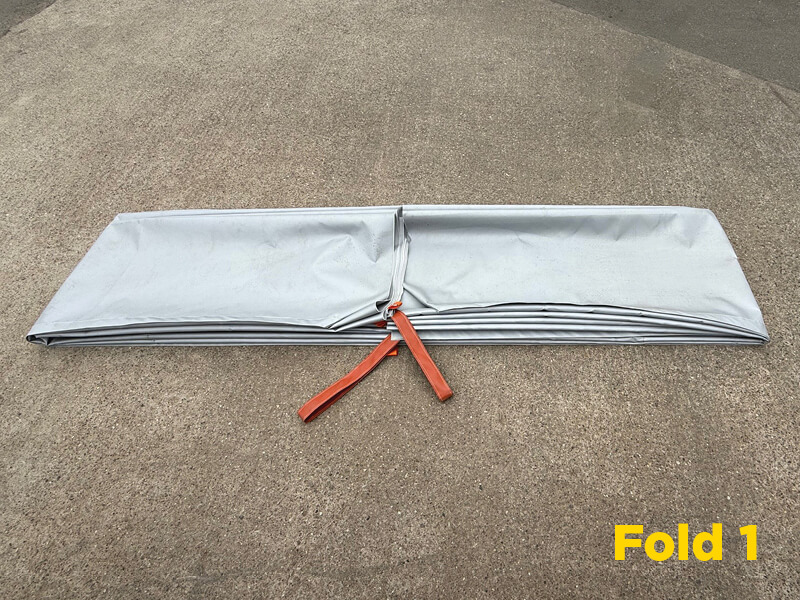
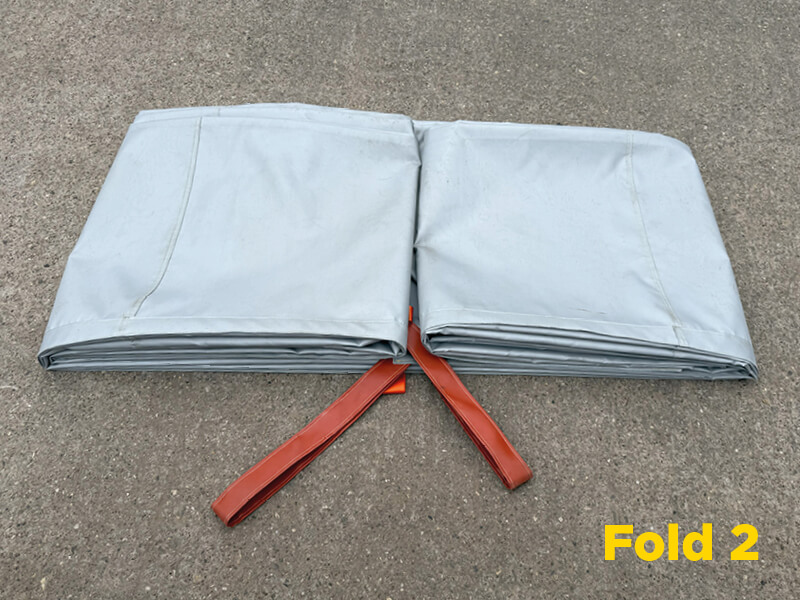
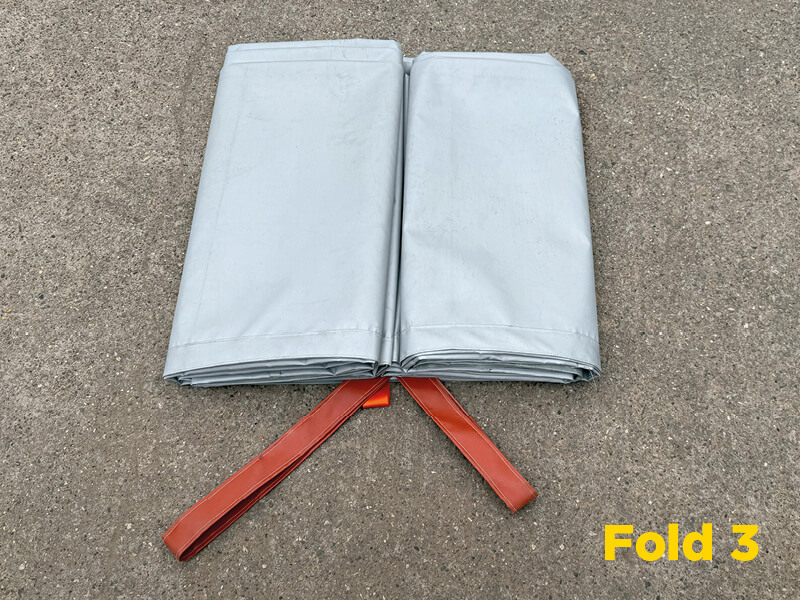
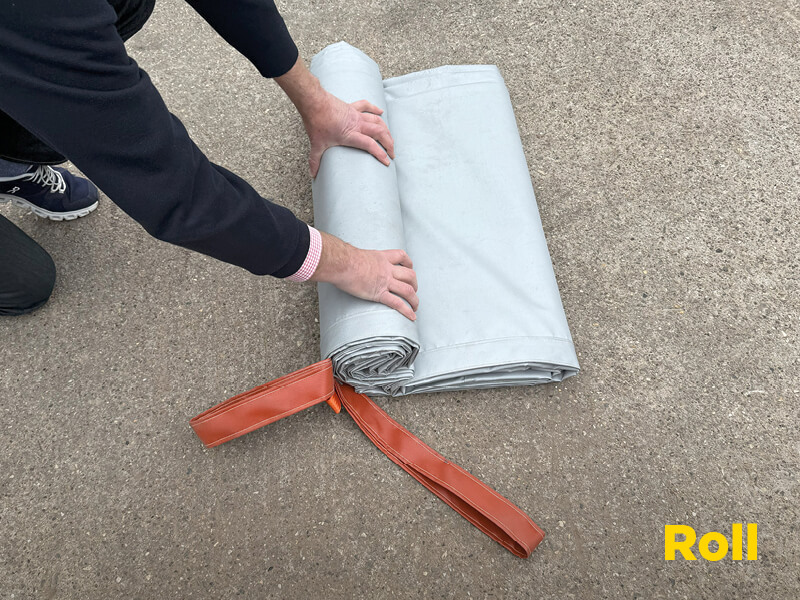
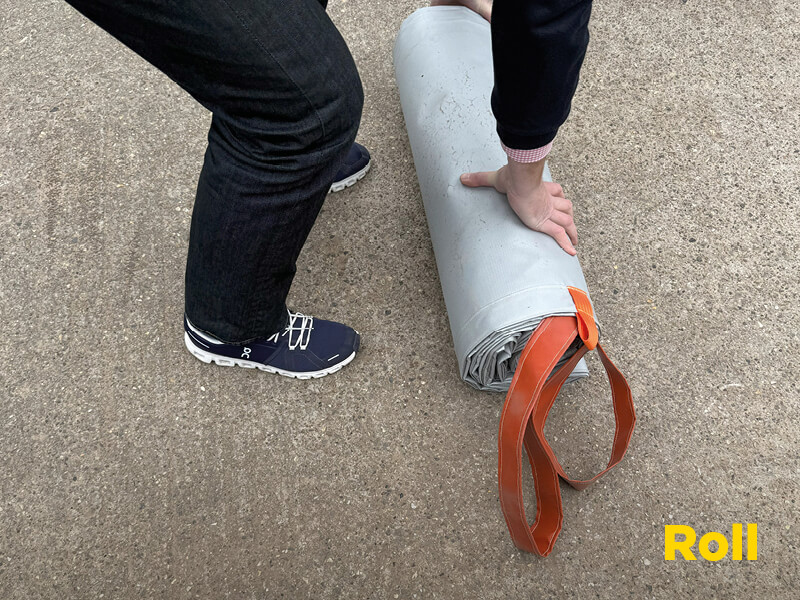
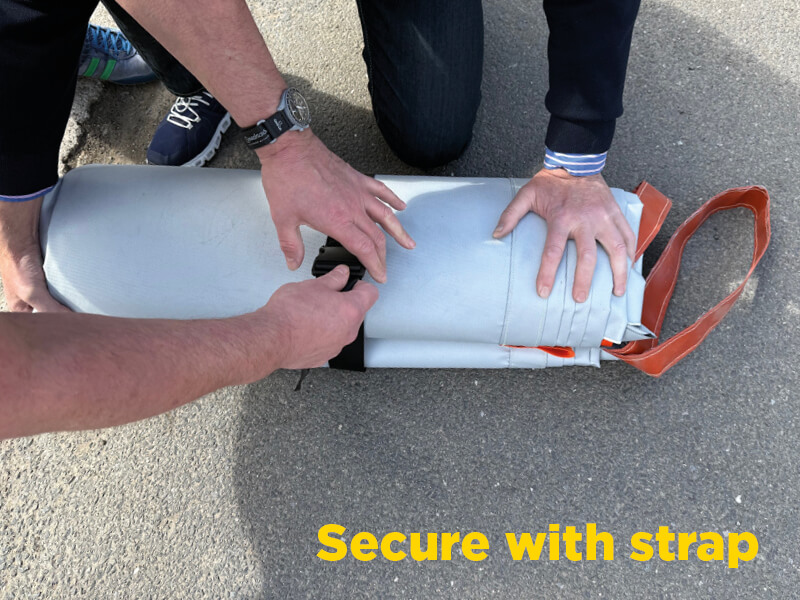
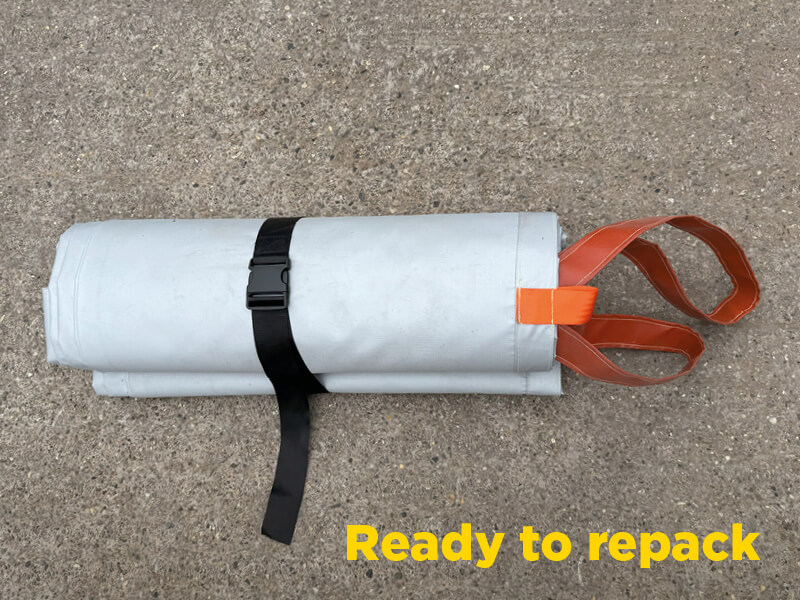
When the blanket has been completely “Z” folded you should then fold the ends of the blanket toward the centre and repeat 3 times. Finally, roll the folded blanket into a cylindrical shape and secure with the strap and fasten the buckle, repack into the storage bag.
Do not forget to replace these instructions in the side pocket of the Fire Cloak™ Bag and the vehicle identification sheet with its clear sealable pouch.