Business Sector
Road Tunnels
EV fire containment for road tunnels
Overview
Road tunnels concentrate traffic, risk and response in one confined space – and with EVs now a routine part of the mix, operators need to plan for lithium battery incidents, as well as conventional vehicle fires. EV battery fires are much harder to stabilise, producing smoke and very high temperatures, with the risk of re-ignition of fire. In this environment, speed of isolation matters – helping limit heat and smoke spread, while established emergency procedures take over.
Fire Cloak™ provides a high-performance, practical containment option to address EV fires and protect road users, tunnel infrastructure, responders and operational continuity.
Trusted by transport authorities and infrastructure operators to manage EV fire risk across road tunnels and critical transport corridors.

Road tunnels reality: What makes EV incidents harder here
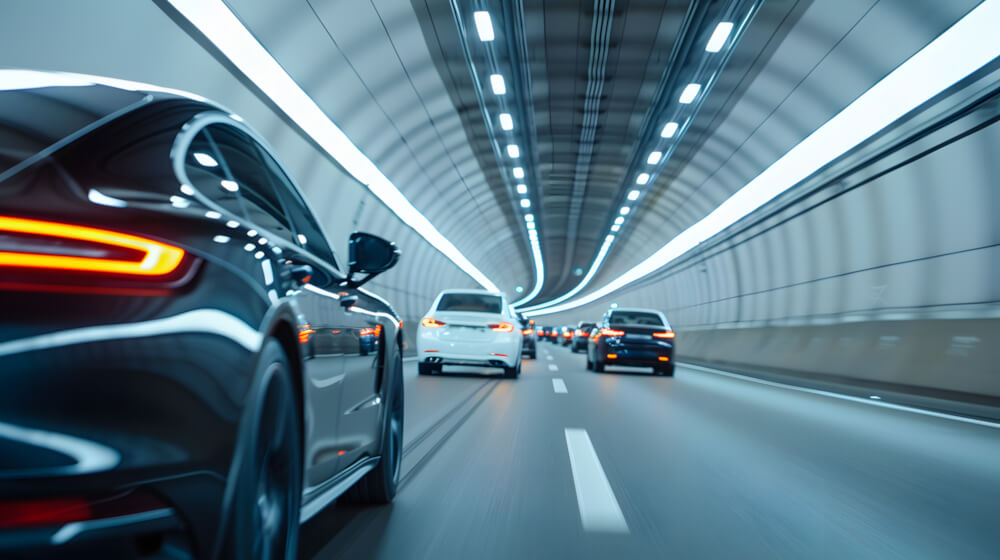
Road tunnels are high-risk, tightly managed environments. Vehicles can be travelling at speed, queuing in traffic, or stopped in confined spaces with limited escape routes and controlled ventilation. Access for response teams can be restricted, and evacuation has to be managed quickly and safely.
If an EV battery fire occurs in such an environment, it can be difficult to control due to thermal runaway, prolonged burning and the risk of re-ignition. In a tunnel environment, smoke, heat and toxic gases can build rapidly, threatening road users, delaying evacuation and placing extreme pressure on emergency response teams.
As EV numbers continue to rise across national and urban road networks, it is critical that tunnel operators can rapidly isolate and contain a suspected EV incident.
What a controlled response requires
In road tunnel environments, EV fire incident containment must align with transport safety regulations, tunnel fire safety arrangements and operating procedures – without adding complexity.
A controlled response typically depends on:
- Containment equipment placed where incidents are most likely to be managed – portals, control points, emergency bays and maintenance areas
- A deployment approach that works in confined spaces, low-clearance areas and reduced visibility conditions
- Clear fit with existing systems and procedures – detection, ventilation, access control and evacuation plans
- Storage that keeps equipment protected, visible and “grab-and-go” ready
- Independent verification of performance that provides confidence
- Simplicity – so trained operators or response teams can act quickly under pressure
How Fire Cloak™ fits in road tunnel operations
Fire Cloak™ EV Fire Blankets are engineered and manufactured in the UK and built to rigorous standards suited to challenging infrastructure environments, including road tunnels and enclosed transport corridors.
Fire Cloak™ is independently tested and certified to DIN SPEC 91489:2024-11, with additional testing aligned to relevant ISO and BSI standards. For road tunnels, that means a proven containment option that can be positioned within tunnel infrastructure, accessed quickly, and deployed by trained teams to help isolate an incident in confined, high-risk environments — with performance verified independently.
Typical use cases in road tunnels
Road tunnels typically position EV containment capability where incidents are most likely to be managed, and where access and evacuation need to be controlled quickly. Common use cases include:
- Long or high-traffic tunnels: where congestion, limited access and longer response routes increase the need for rapid containment.
- Tunnels with restricted ventilation or complex evacuation routes: where smoke management is critical and early isolation helps reduce wider disruption.
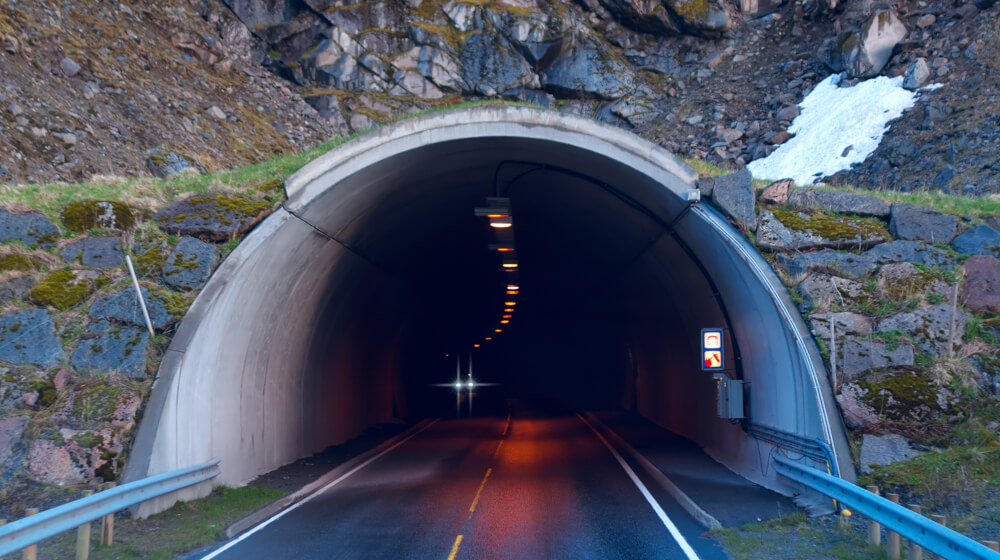
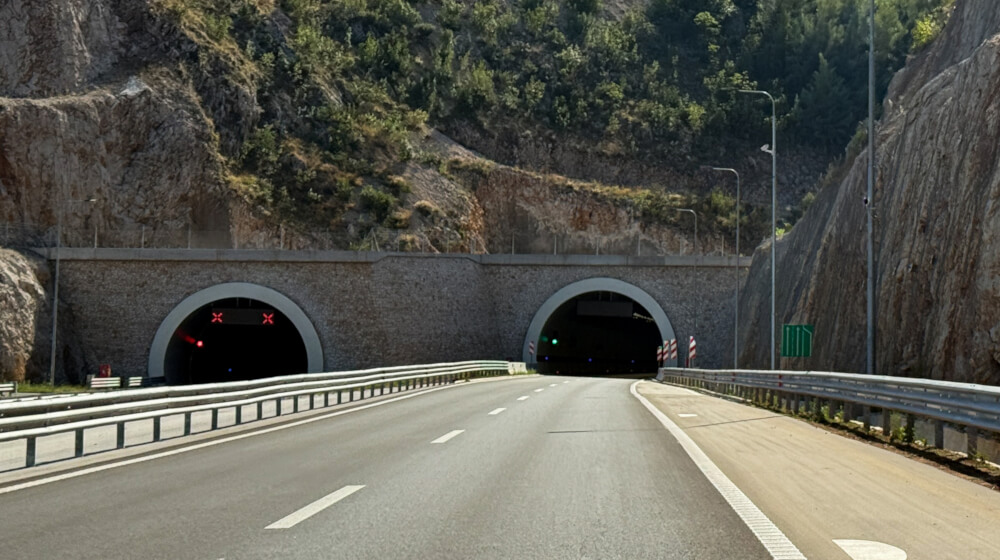
- Tunnel portals and approaches: where vehicles can often be intercepted or managed before conditions worsen inside the tunnel.
- Emergency lay-bys / stopping bays: designated areas where stopped vehicles are more likely and response teams can reach quickly.
- Control points and response hubs: locations where tunnel operators and incident teams are stationed and equipment can be accessed fast.
- Maintenance compounds and plant areas: where vehicles may be present and where critical infrastructure sits close by.
Deployment overview
In road tunnels, incidents occur in confined, high-risk locations, so speed, clarity and access to equipment matter. Fire Cloak™ can be supplied in robust storage boxes at fixed locations within tunnel infrastructure, allowing quick deployment by trained tunnel operators or emergency response teams as follows:
- Retrieve the blanket from its designated storage location
- Approach the vehicle and prepare deployment in line with tunnel fire safety and evacuation procedures
- Deploy the blanket over the vehicle to help isolate the incident and limit heat/smoke spread.
- Continue response actions in coordination with existing tunnel fire safety systems and emergency response protocols
Proof in road tunnels
Fire Cloak™ is trusted by transport authorities and infrastructure operators across the UK, including National Highways and Transport for London, to support EV fire safety with a rapid, controlled response in road tunnels and confined transport environments.
Frequently asked questions
Can Fire Cloak™ be used in road tunnel environments?
Yes. Road tunnels are controlled, confined environments where speed of response and access matter. Fire Cloak™ can isolate and contain a suspected EV battery incident quickly, supporting tunnel teams while established tunnel procedures and emergency response plans are followed.
Where should EV fire blankets be stored in tunnels?
Fire Cloak™ should be stored at strategic tunnel locations such as portals, control points, emergency bays or maintenance areas, using robust storage that keeps the equipment protected and ready for immediate use.
How many people are needed to deploy Fire Cloak™?
Fire Cloak™ is designed for straightforward deployment by trained tunnel operators or emergency response teams. In most cases, two people are required to safely deploy the blanket.
Does this replace existing firefighting equipment?
No. Fire Cloak™ is designed to strengthen existing tunnel fire safety systems and emergency response procedures by providing an additional layer of containment specific to lithium battery fire risk.
Is Fire Cloak™ tested and certified?
Yes. Fire Cloak™ is independently tested and certified to DIN SPEC 91489:2024-11 — the toughest global safety standard for lithium battery fire containment — alongside relevant ISO and BSI standards.
If you have a specific question about Fire Cloak™ for road tunnel applications that isn’t answered here, please get in touch with our team for tailored advice.
Next steps
If you operate road tunnels as part of a national or urban transport network and accommodate electric vehicles as part of daily traffic, Fire Cloak™ can support your EV fire preparedness with a practical containment solution that integrates seamlessly into existing tunnel fire safety and emergency response procedures.
Download this business sector:
Road Tunnels